When Apple intensified its privacy warnings in October 2025, singling out Chrome's fingerprinting practices, it marked the latest salvo in an ongoing privacy war between the tech giants. The timing was strategic: according to browser market share data, Chrome consistently holds over 65% of the global browser market share, making Apple's critique a direct challenge to how the majority of internet users are tracked. But beneath the competitive posturing lies a more complex reality: both companies are reshaping how the internet tracks users—sometimes as rivals, sometimes as collaborators—and businesses need to understand what's changing and why it matters for their analytics strategy.
Recent 2025 Tracking Warnings
In October 2025, Apple intensified its stance against Google's tracking methods, specifically targeting the Chrome browser and raising concerns about user privacy. This marked a significant escalation in the ongoing privacy debate between the two tech giants, coming just months after Italy's antitrust authority fined Apple €98.6 million ($116 million) in December 2025 over its App Tracking Transparency (ATT) feature. Apple's privacy documentation has consistently emphasized the importance of user control over tracking, positioning Safari as a more private alternative to Chrome.
Fingerprinting Concerns
Apple has warned that Google Chrome allows "secretive fingerprinting," a method that uses extensive device characteristics (like installed fonts, plugins, hardware details, and other system-level information) to create a unique profile that users cannot disable or opt out of. This technique bypasses traditional cookie-based tracking and creates persistent cross-site identifiers without user consent or transparency.
Important distinction: Not all fingerprinting is created equal. Consent-based analytics platforms use limited, transparent fingerprinting methods (typically only basic browser and screen characteristics) for first-party analytics only, with clear user disclosure and GDPR compliance. This differs from the invasive, cross-site fingerprinting that Apple criticizes.
Safari Protections
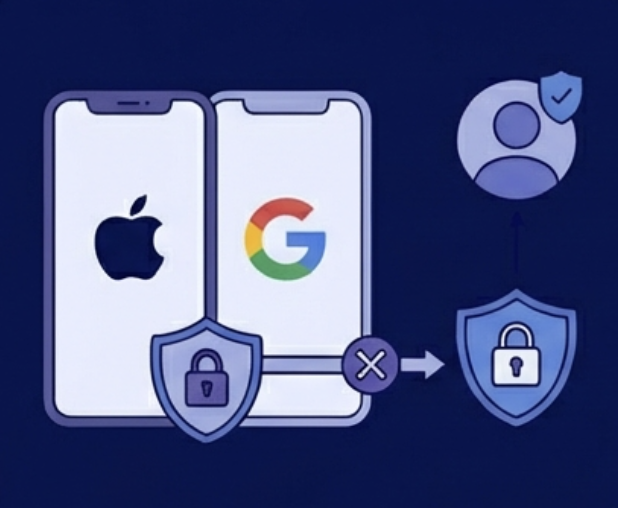
Apple promotes Safari as a more private alternative through its Intelligent Tracking Prevention (ITP) and Advanced Tracking and Fingerprinting Protection features. Safari simplifies system configurations so millions of iPhones appear identical to trackers, effectively masking individual identities.
Collaborative Efforts
Despite their rivalry, the two companies have partnered on industry-wide standards to prevent "unwanted tracking," demonstrating that privacy concerns can sometimes bridge competitive divides.
Bluetooth Tracker Alerts
In May 2024, Apple and Google announced their collaboration on the "Detecting Unwanted Location Trackers" (DULT) standard, which was finalized in 2025. This collaboration ensures that both iOS (version 17.5+) and Android (version 6.0+) now send automatic alerts if a compatible Bluetooth tracker (like an AirTag or Pebblebee) is detected moving with the user. According to Apple's official announcement, users receive an "[Item] Found Moving With You" alert, allowing them to view the tracker's identifier, play a sound to locate it, and access instructions to disable it.
Fundamental Differences in Tracking Models
The companies remain ideologically split on how they handle user data for their business models, which directly impacts their approach to tracking protections.
Apple's Approach
Apple relies primarily on hardware sales, which allows it to take a more aggressive stance on privacy. The company uses App Tracking Transparency (ATT) to require third-party apps to ask for explicit user permission before tracking them across other companies' apps and websites.
- Hardware-first business model enables stronger privacy stance
- App Tracking Transparency (ATT) requires explicit user consent
- Safari's Intelligent Tracking Prevention (ITP) blocks cross-site tracking
- Privacy labels on App Store provide transparency
Google's Approach
Google relies heavily on advertising revenue, which creates a different set of priorities. While it has introduced the Privacy Sandbox to replace individual tracking with "cohort-based" tracking, it still collects extensive data within its own ecosystem of apps (Gmail, Maps, Search) to power its ad network.
- Advertising-first business model requires data collection
- Privacy Sandbox aims to balance privacy with ad effectiveness through cohort-based targeting
- Extensive data collection within Google's own ecosystem (Gmail, Maps, Search, YouTube)
- Gradual transition from third-party cookies to alternative methods
The Reality: Both Companies Collect Data
While Apple positions itself as the privacy champion, it's important to note that both companies collect substantial user data. Apple gathers information through iCloud, Apple Maps, Siri, and the App Store. The key difference isn't whether they collect data, but how they use it: Apple monetizes primarily through hardware sales and services, while Google monetizes through advertising revenue.
Both companies face increasing regulatory pressure from the EU's Digital Markets Act (DMA) and similar legislation worldwide, forcing both to change how they handle user data regardless of their business models.
How to Limit Tracking
Users have more control than ever over their tracking preferences. Here's how to limit tracking on both platforms:
📱On iPhone
- 1.Navigate to Settings > Privacy & Security > Tracking
- 2.Disable "Allow Apps to Request to Track"
- 3.Manage location services under Privacy > Location Services
🤖On Android
- 1.Go to Settings > Privacy > Ads
- 2.Reset your advertising ID or opt-out of personalized ads
- 3.Manage location permissions under Privacy > Location
What This Means for Analytics
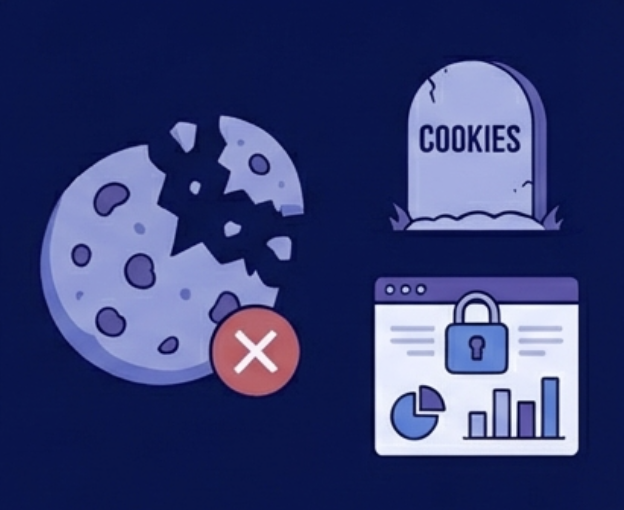
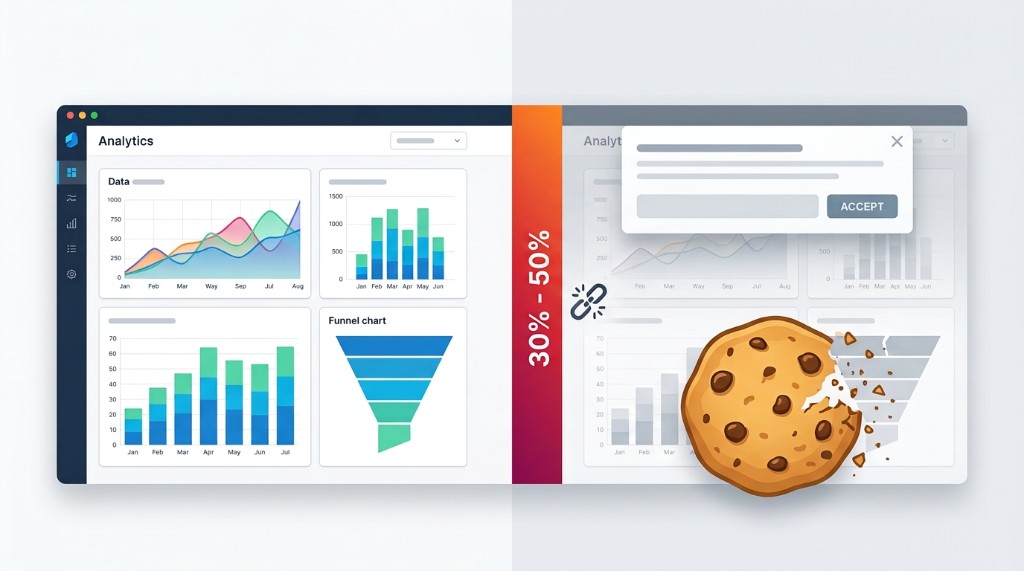
The intensifying privacy protections from both Apple and Google have significant implications for web analytics. Traditional tracking methods are becoming less reliable, making privacy-conscious alternatives increasingly important. Businesses relying on cookie-based analytics or third-party tracking pixels are already seeing declining accuracy and will face even greater challenges as these protections intensify.
Key Takeaways for Businesses
- ✓Privacy is non-negotiable: Users expect and demand better privacy protections
- ✓Traditional tracking is declining: Cookies and invasive fingerprinting are being blocked
- ✓Privacy-respecting analytics work: You can still get valuable insights while respecting user privacy
- ✓Future-proof your analytics: Adopt cookieless solutions now to avoid disruption later
The Future of Privacy-Conscious Analytics
As Apple and Google continue to strengthen privacy protections, businesses need analytics solutions that respect user privacy while still providing valuable insights. Modern analytics platforms designed with privacy in mind offer accurate visitor identification without cookies or invasive fingerprinting, GDPR compliance built-in, and transparent data practices that build user trust.
The privacy landscape is evolving rapidly, and businesses that adapt early will be better positioned for long-term success. When evaluating analytics platforms, prioritize solutions that are designed to work within the new privacy constraints from the ground up, rather than retrofitted to comply.
Actionable Steps for Businesses
- Audit your current analytics: Review what data you're collecting and how it's being tracked. Identify dependencies on cookies or third-party tracking.
- Update your privacy policy: Ensure it accurately reflects your data collection practices and complies with current regulations.
- Test cookieless alternatives: Evaluate analytics platforms that don't rely on cookies to understand their accuracy and capabilities.
- Plan for transition: Develop a migration strategy that minimizes disruption while improving privacy compliance.
- Monitor regulatory changes: Stay informed about new privacy regulations and how they might affect your analytics strategy.
Siva J.P.
Privacy Research Lead at WysLeap