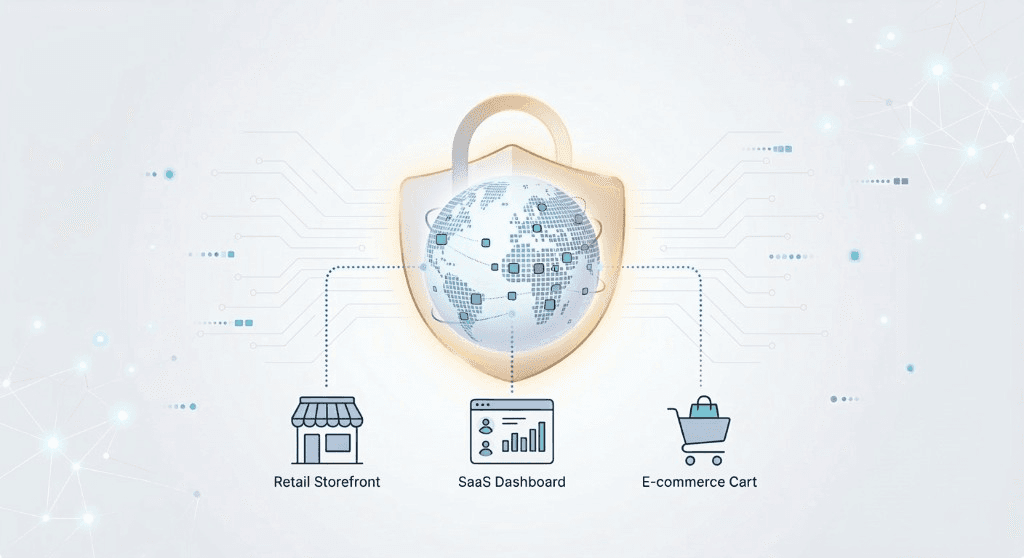
How different kinds of businesses can use privacy-first visitor intelligence without compromising on insights or user trust.
The Attribution Challenge
Since Apple introduced App Tracking Transparency (ATT) with iOS 14.5 in April 2021, mobile advertising has changed fundamentally. Industry reports suggest that a large majority of iOS users opt out of tracking when prompted, creating significant challenges for attribution and conversion tracking. Marketing teams report that traditional attribution models have become increasingly unreliable since ATT's introduction.
E-commerce companies have been particularly affected. Many report that attribution became much less reliable after iOS 14.5 introduced ATT, making it difficult to measure campaign effectiveness and optimize ad spend. This "attribution blackout" has forced businesses to rethink their analytics strategies, leading many to explore privacy-first alternatives that don't rely on user consent for tracking.
The Impact on Conversion Tracking
When users opt out of tracking, businesses lose visibility into:
- Which marketing channels drive conversions
- Customer journey paths across devices and platforms
- Return on ad spend (ROAS) for specific campaigns
- Cross-device user behavior and attribution
This data loss has created a critical need for analytics solutions that can provide accurate insights without requiring user consent or relying on third-party tracking identifiers.
Why Privacy-First Analytics Works
Many businesses worry that privacy-first analytics means sacrificing insights. The scenarios below show how that doesn't have to be the case. Because privacy-first platforms don't depend on tracking consent, they can see visits that consent-dependent tools miss when users opt out.
Example scenarios. These are illustrative scenarios based on common situations. They are not results from specific WysLeap customers, and not measured outcomes.
Example scenario · Retail
E-commerce platform
The challenge
Attribution became unreliable after the iOS 14.5 ATT rollout, making it difficult to measure campaign effectiveness and optimize ad spend
The approach
Implemented privacy-first visitor intelligence with intent scoring that doesn't rely on cookies
What they can measure
- Recognize returning visitors without cookies
- Measure campaign effectiveness on visits that consent-based tools miss
- Use intent scores to focus optimization on high-intent visitors
- Simplify GDPR compliance with less consent management overhead
Example scenario · Technology
SaaS startup
The challenge
Required detailed analytics while respecting user privacy
The approach
Switched to a privacy-first platform with behavioral analytics and intent scoring
What they can measure
- Spot where visitors drop off and test fixes to reduce bounce rate
- Identify high-intent visitors for targeted campaigns
- Review whether cookie banners are still needed, to simplify the experience
Example scenario · Media
Content publisher
The challenge
Needed to understand reader behavior without tracking
The approach
Deployed privacy-first analytics with behavioral patterns
What they can measure
- Understand reader engagement patterns
- Shape content strategy around visitor intent
- Keep reader trust with a privacy-first approach
Key Takeaways
- More complete data: Privacy-first platforms don't depend on cookie consent, so they can include visits that consent-dependent tools miss.
- Improved user trust: Users appreciate privacy-first approaches, which helps build long-term trust.
- Simpler compliance: GDPR compliance is much simpler when you minimize personal data collection from the start.
- Deeper insights: Features like intent scoring and behavior segments go beyond raw traffic counts.
Making the Switch
If these scenarios resonate with your business needs, making the switch to a privacy-first platform is often easier than you might think. Most modern platforms offer simple JavaScript integration that can be implemented in minutes.
When evaluating privacy-first analytics solutions, look for platforms that provide the insights you need while respecting user privacy. Key features to consider include:
- Reliable returning-visitor recognition without cookies or invasive tracking
- Advanced analytics features like intent scoring and visitor intelligence
- GDPR and privacy regulation compliance built-in
- Real-time analytics and actionable insights
- Straightforward integration with minimal technical overhead
Moving to privacy-first analytics helps with compliance, but the bigger payoff is a way of understanding your visitors that lasts and keeps their trust. As these scenarios show, you don't have to give up insights to get privacy.