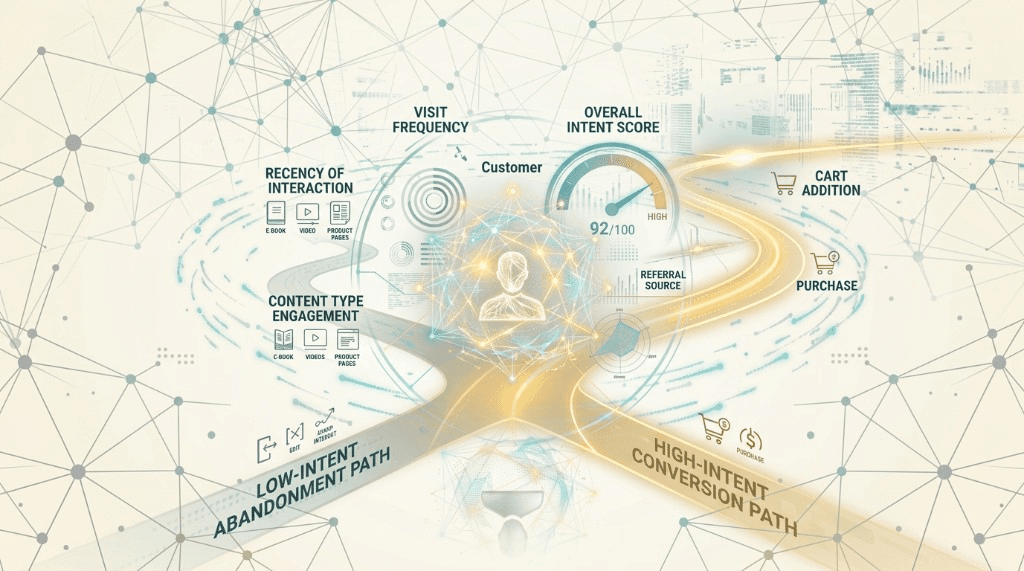
Google Analytics and Adobe Analytics were built for an era where every click was a human, every session was a person, and cookies could be trusted to tell you who was who. That era is over.
Yet traditional analytics dashboards look the same as ever. The reports still run and the numbers still go up and to the right. The trouble is that you can no longer trust what you're seeing.
"The fog isn't that you can't see anything. It's that you can't trust what you're seeing."
Media teams often describe their analytics situation with a single word: fog. Traffic is up. They can see sessions, pageviews, engagement ticking steadily upward. But what they can't see is who, or what, is actually on their site.
The KPI Massacre: What's Breaking
Here is specifically what's breaking in your analytics:
Unique Visitors: Inflated by Bots
Fraud0's "Unmasking the Shadows 2025" report found that roughly one in five reported visits on typical publisher sites aren't human at all. Your audience size is inflated, and you probably don't know by how much.
Engagement Metrics: Corrupted in Both Directions
Crawl-style bots create phantom "power users." These are sessions with near-zero bounce rates, abnormally long durations, and hundreds of pageviews. They look like your most engaged readers, but they're not reading anything. Hit-and-run bots do the opposite: zero-second sessions, 100% bounce rates, dragging your averages down. So your actual human engagement is being masked by noise at both ends of the spectrum.
Ad Impressions: ~15% Served to Machines
Fraud0's analysis found 14.9% of ad impressions are delivered to bots (8.7% confirmed, 6.2% suspected). Those impressions cost money, yet they generate zero value. And fraudulent clicks convert at roughly half the rate of legitimate ones, so even your click-through rates can't be trusted.
Attribution: Completely Broken
Say an AI agent scans your article to answer a person's question, and that person never visits your site in their own browser. Your ad attribution has no good way to record that as an impression or a session. Your content was consumed, but no human eyes saw your page, no ads were viewable, and your attribution model thinks you delivered value you can't monetize.
Taken together, these issues add up to a strategic problem that keeps getting worse. Every decision you make on these numbers, from ad pricing and content strategy to product development and hiring, now rests on compromised data.
Not All Machines Are Equal
This is where it gets complicated. Not every bot is bad, and the range of non-human traffic now visiting your site calls for a more careful response than simply "block or allow."
1. Legitimate Crawlers
Industry measurements suggest Googlebot alone accounts for more HTML request traffic than all AI bots combined. These are the crawlers you want. They index your content, surface it in search results, and drive organic traffic. Blocking them would be self-sabotage.
2. Unauthorized Scrapers
Next, you have unauthorized scrapers. These AI crawlers systematically harvest content to train models or power AI services, often without permission or compensation. This is the traffic you might want to block, monetize through licensing deals, or at minimum, understand.
3. Agentic Browsers
This is the new category, and the most disruptive. Tools like Perplexity Comet, ChatGPT Atlas, and Google's Gemini-in-Chrome do more than crawl. They browse on behalf of humans, logging in, navigating, comparing options, and completing tasks.
According to HUMAN Security, agentic traffic grew 1,300% between January and August 2025. Then it jumped another 131% month-over-month from August to September as commercial tools rolled out.
The Agentic Blind Spot
While legacy bots inflate your metrics, agentic browsers don't show up at all. They fetch HTML and APIs directly, without executing scripts. No script execution, no pageview recorded. A real human delegated a real task to an AI agent. It visited your site, browsed your content, maybe even influenced a subscription. Your analytics recorded nothing.
"The more legitimate the bot, the more invisible it becomes."
Why Media Gets Hit Hardest
If you're in media and entertainment, you're facing a double hit that other industries don't experience.
The Zero-Click Problem
Referral traffic from search is already under pressure. But agentic browsers add a new layer: AI that visits your site on behalf of a user who never sees it. As one publishing executive told Digiday: "If the browser is disintermediating us—that's a whole new level of disintermediation."
7x More Likely to See AI Bot Traffic
Arc XP's analysis found that media sites are 7x more likely to see AI bot traffic than average websites. The reason is that news content is valuable, especially for training models, generating answers, and summarizing news.
Your content is both the raw material for AI training and the source for AI-generated answers. You lose on the way in and again on the way out.
The Practical Damage
Consider this scenario: Your "engaged readers" metric is up 40%, but subscription conversions are flat. The editorial team is celebrating while the revenue team is confused. In reality, a significant portion of that "engagement" is answer-fetching agents scraping your content to power AI responses elsewhere.
The Framework: Detect → Analyze → React
The good news is that this problem can be solved, though it means rethinking how you measure. You can't filter what you can't see, and you can't see agentic traffic with client-side JavaScript tags alone.
1. DETECT
Agentic browsers don't execute JavaScript. If your analytics depend on a script firing in a human-operated browser, that traffic simply never appears. So the first step is to augment your data collection.
- Server-side tracking that captures HTTP requests regardless of script execution:
- Behavioral fingerprinting that looks beyond user-agent strings:
- ML models trained on your actual traffic patterns to identify anomalies:
A practical starting point is to compare what your web servers actually received against what your analytics platform recorded. The delta is your blind spot.
2. ANALYZE
Once you can see the traffic, you need to segment it properly. Four buckets minimum:
- Humans: Your actual audience
- Legitimate bots: Search crawlers, authorized tools
- Unauthorized scrapers: Training data collection, content theft
- Agentic browsers: AI acting on behalf of humans
Each requires different treatment. Each affects your metrics differently. And you need parallel KPI views: human-only metrics for revenue decisions, full-traffic metrics for infrastructure planning and content strategy.
3. REACT
The conversation in the industry has been largely defensive: block the bots, filter the traffic, protect the metrics. That covers only half of it.
If an AI agent is acting on behalf of a genuine customer with genuine subscription or engagement intent, blocking it means blocking the sale. Successful publishers in 2026 won't be the ones who keep agents out. They'll be the ones who figure out how to serve both audiences: humans who browse visually and agents who parse.
The Opportunity
The data on agentic browsing is alarming, but there is real opportunity in it too.
87% of AI Agent Visits Are Product-Related
HUMAN Security found that 87% of AI agent page visits are product-related. That points to commercial intent rather than random crawling: real customers handing purchase research to AI assistants.
The trajectory is clear: agentic traffic grew 1,300% in the first eight months of 2025, then jumped another 131% month-over-month as commercial tools rolled out.
Gartner predicts traditional search volume will drop 25% by 2026. The front door to the web is changing. Companies that can see and serve agentic traffic will capture the value. The rest will be invisible.
What Success Looks Like
The companies that get this right will turn the agentic era into a competitive advantage. They'll:
- Know which agents are driving revenue
- Optimize experiences for both humans and machines
- Negotiate licensing deals from a position of knowledge, not ignorance
- Build detection capabilities that evolve with the threat
What Modern Measurement Looks Like
The industry is shifting toward server-side measurement. The IAB Tech Lab launched its Trusted Server framework in March 2025, signaling that the browser-dependent era is ending. A framework only helps once someone implements it, though.
Why Legacy Analytics Can't Catch Up
Industry reports suggest a consistent pattern: analytics platforms undercount total traffic while simultaneously overcounting "engaged" humans. Consequently, publishers are making pricing and editorial decisions on compromised data.
It's tempting to assume Google will solve agentic measurement once Chrome gets agentic capabilities. But Google is not a neutral actor. The company operates the world's largest advertising network and the dominant measurement tool. Exposing how much inventory is consumed by non-humans doesn't serve that interest.
The WysLeap Approach
WysLeap's privacy-first analytics platform tackles the part of this problem you can act on today:
- Bot and AI-crawler detection: Known bot and AI-crawler user agents, automation and headless-browser detection, and simple browser signals
- Flagged at ingest: Bots are marked as they arrive, not days later in a cleanup job
- Human-only metrics: Flagged bots are excluded from human metrics, giving you cleaner KPIs for revenue decisions
- Privacy-first: Visitors get a random, anonymous ID in the browser's local storage, with no cookies and no names or emails
The First Step Is Visibility
You can't optimize what you can't see. The companies still waiting for the industry to figure this out will find themselves permanently behind. The old, stable order is gone, and we're now in a disruptive phase with new players and new rules.
The media companies that do well will be the ones that get past the shock quickly and adapt.
Ready to see what you're missing?
WysLeap flags bots and AI crawlers at ingest and keeps them out of your human metrics, giving you the visibility you need to make better business decisions. Get started free.