The website is losing its job as the front door. It is not losing its reason to exist.
A new argument is making the rounds in product and marketing circles: discovery now starts inside ChatGPT, Gemini and Perplexity, so why keep investing in a website at all? Go headless, expose your catalog and actions through an API or an MCP server, and let the AI engines bring customers to you.
Part of that is right. Discovery is moving into AI answers, and the click that used to follow a search is disappearing. But “go headless” treats the website as one thing. It never was. It was doing four jobs at once, and each job is heading somewhere different.
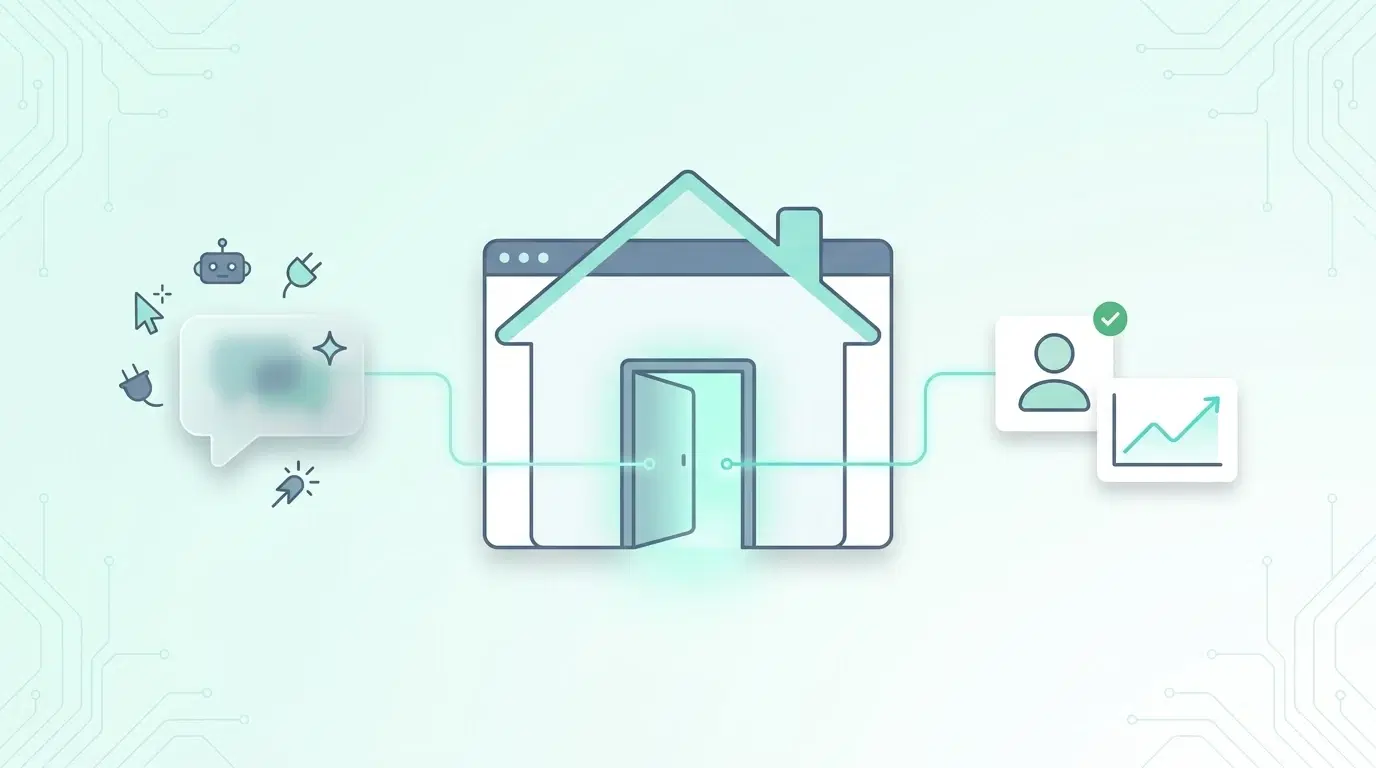
“The website stops being the only door and becomes the house.”
The Four Jobs a Website Does
Only one of the four, discovery, is clearly moving to AI engines. The other three split, shrink, or stay put.
| Job | Where it is heading | Why |
|---|---|---|
| Discovery: “What are my options?” | Moving into AI engines, fast | AI answers resolve the question without a click. The shortlist is now written by a model. |
| Evaluation: “Can I trust this one?” | Split between the AI and the site | The AI does the research. People still visit to check claims, compare and get a feel, especially for bigger purchases. |
| Transaction: “Let me buy, book or sign up” | Commodity tasks shift to agents | Reordering, booking a known slot, buying a known product. This is where APIs, MCP servers and agent checkout protocols matter. |
| Relationship: “Help me use what I bought” | Unchanged, or growing | Accounts, onboarding, support and, for software companies, the product itself. Nobody runs their CRM through a chatbot. |
The “go headless” argument is really an argument about the first job, applied to all four.
Who Feels It Most
How much the shift hurts depends on which of the four jobs your website mostly does.
- Publishers and content sites are hit hardest. Their whole model is discovery traffic, and AI answers absorb exactly that.
- Commodity commerce, travel and local services will see a growing share of transactions handled by agents. The site becomes the fulfilment layer behind them.
- B2B software and high-consideration purchases lose the top of the funnel but keep the close. Buyers arrive later, better informed and fewer in number, with a shortlist an AI wrote for them.
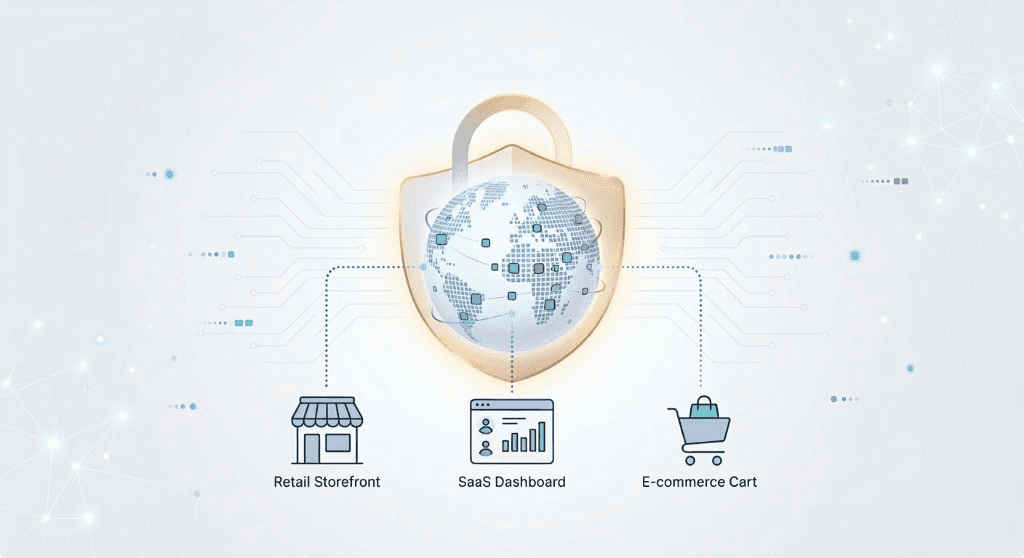
- Products that live in the browser (SaaS apps, portals, dashboards) are barely touched. For these companies the website is the product.
Why “Headless Only” Is a Trap for Most Businesses
Follow the incentives. AI engines want to sit between the customer and the brand. Brands want to own the relationship. Going headless-only means volunteering for the supplier role in someone else's marketplace.
We have seen this before. Sellers who lived only on Amazon, developers who lived only in an app store, and publishers who lived only on Facebook all survived, but on the platform's terms. They lost pricing power, customer data and the chance to build a brand people seek out by name.
Not either-or
Serious businesses will expose structured data and actions to agents, and keep an owned destination where the relationship lives. The website stops being the only door and becomes the house.
Why the Website Survives
Three forces keep owned websites relevant, even for the businesses most exposed to AI discovery.
1. The web is still the universal API
Most businesses will never build an MCP server. Agentic browsers such as ChatGPT Atlas, Perplexity Comet and Gemini in Chrome handle that by simply using the website: loading pages, reading them and clicking buttons. For years, much of what we call agent traffic will be agents visiting ordinary web pages.
2. AI engines read your site to describe you
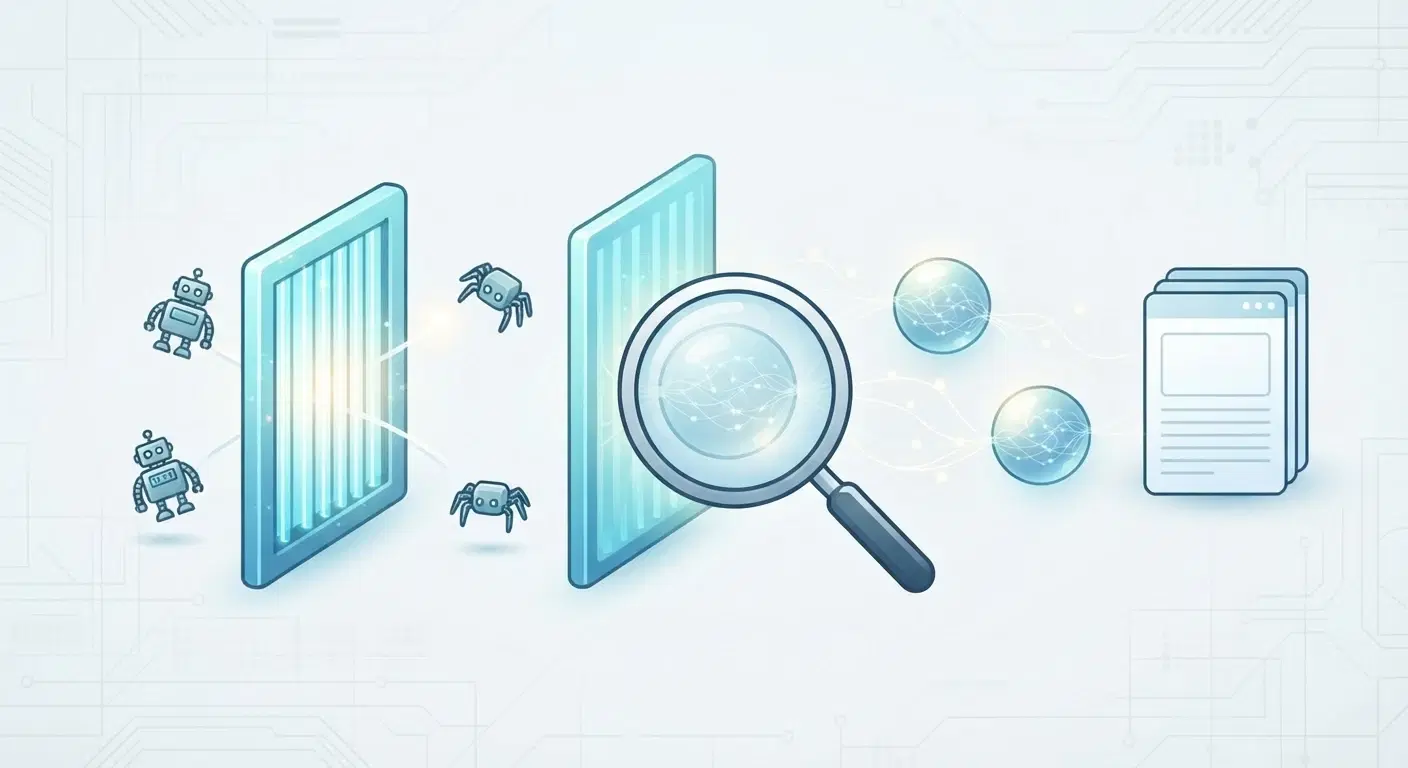
When an assistant answers a question about your product, it draws on what it has crawled and fetched. Your pages are the raw material for that answer. A thin, outdated or JavaScript-only site produces thin, outdated answers.
3. The shift is real but early
For most sites, AI referrals are still a small share of visits, even while AI crawlers fetch pages in growing volume. That gap is the warning sign: the machines are reading far more than they send back. It is not yet a reason to tear anything down.
The New Measurement Problem
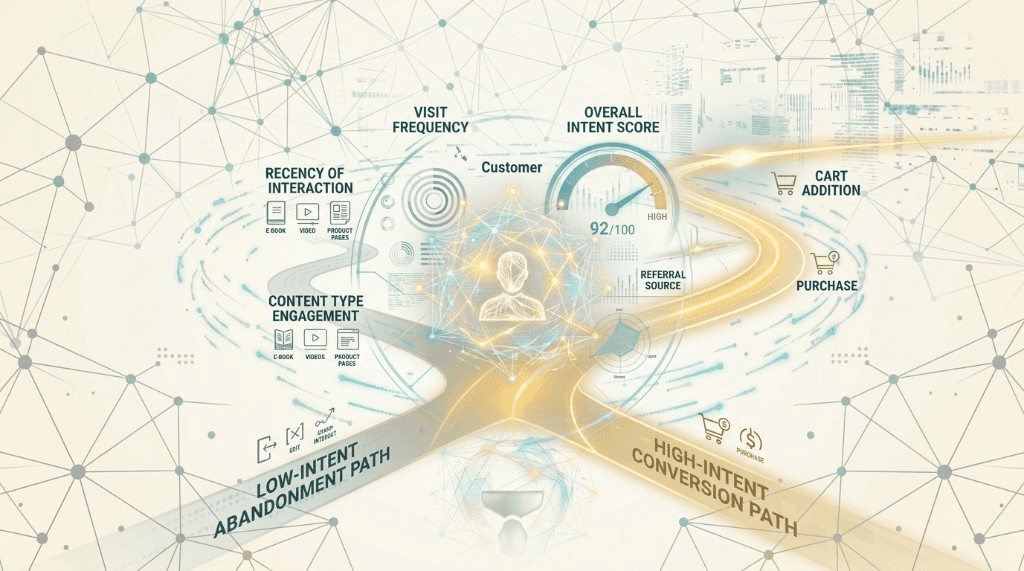
Web analytics was built for a world where every visit was a person loading a page. Now much of the journey happens before anyone loads a page, or without a page at all.
| Step in the journey | What happens | Seen by a pageview tag? |
|---|---|---|
| 1. AI answer mentions you | An assistant names you on a shortlist, or leaves you out | No |
| 2. AI crawler fetches pages | Bots read your site to build and refresh their answers | No |
| 3. Agent calls your API | An MCP server or API completes a task directly | No |
| 4. Agentic browser visits | An AI agent loads pages and clicks like a person | Yes, but usually counted as a human |
| 5. Human visits | Someone arrives, often with an AI-written shortlist | Yes |
| 6. Conversion | Sign-up, booking or purchase | Yes |
A standard analytics tag records the last two steps clearly. It records agentic browsers too, but usually can't tell them apart from people. The first three steps, where an AI decides whether you make the shortlist, never reach it.
Questions most teams can't answer today
- Which AI engines mention us, and are the facts right?
- Which pages do their crawlers read, and how recently?
- When an agent tried to complete a task on our site, did it succeed?
- How many of last month's sign-ups started with an AI answer?
What to Do Now
You do not need to choose between a website and an agent strategy. You need a website that works for both kinds of visitor, and a way to see both.
- Find out what AI engines say about you. Ask the major assistants the questions your buyers ask. Note where you appear, where you don't, and where the facts are wrong.
- Make your site readable without a browser. Key facts (pricing, features, policies) should be in server-rendered HTML, not hidden behind scripts, tabs or logins.
- Check who is actually reading. Your server or CDN access logs show which AI crawlers fetch which pages, and how often. Verify their IP ranges, because crawler user agents are easy to fake.
- Test your key flows with an agentic browser. Try to sign up, book or buy using one. Cookie walls, CAPTCHAs, hover-only menus and unlabeled buttons stop agents just as they frustrate people.
- Expose structured actions where they pay off. If agents can do a common task for your customers (book, reorder, check status), an API or MCP endpoint is worth building. Keep the website as the place the relationship lives.
- Measure across surfaces, not just pageviews. Treat AI mentions, crawler fetches and agent sessions as part of your funnel, even before your analytics shows them neatly.
The Website's New Job
The website is becoming two things at once: the source of truth that AI engines read to describe you, and the destination where customers who arrive with an AI-written shortlist decide to stay. Neither job goes away when discovery moves. Both get harder to do well without seeing who, or what, is on the other end.
Keep reading
For more on the machines already reading your site, see LLM Crawlers Are the New Bot Problem and The Invisible Audience.